What Is Kratom Stem And Vein?
🎯 Quick Answer
|
Kratom shoppers who come across the phrase “stem and vein” often assume it refers to a strain color, like red or white vein Kratom. It doesn’t!
This guide covers what stem Kratom and vein actually is, where in the plant it comes from, how it’s separated and processed, how its alkaloid profile compares to leaf material, and why it’s classified — and priced — differently from standard Kratom powder.
📌Key Takeaways
- Kratom stem and vein comes from the stem and central vein of the leaf, not the leaf blade itself.
- It is a separate category from vein color classifications like red, green, or white vein Kratom.
- Its alkaloid composition differs from leaf material, reflecting the different plant tissue it’s drawn from.
- It carries a lower price position than leaf powder, tied to its role as a secondary output of leaf processing.
What Is Kratom Stem And Vein & Where It Comes From?
Kratom stem and vein refers to the fibrous stem and central vein tissue of the Kratom leaf, separated from the leaf blade during processing and dried or milled on its own.
Kratom stem and vein originate directly from the Mitragyna speciosa tree, primarily grown and harvested in Southeast Asia.
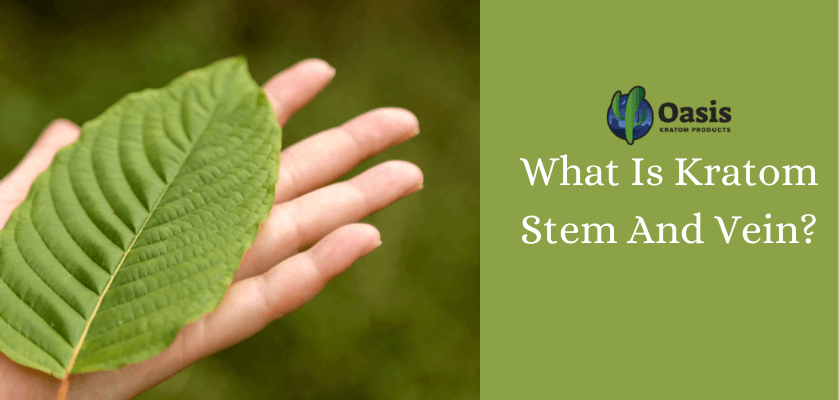
👉Every Kratom leaf is made up of three basic parts: the broad, flat blade; the central vein (or midrib) running through its center; and the stem (petiole) connecting the leaf to the branch.
👉Kratom stem and vein material is drawn from the vein and stem portions specifically — the parts of the leaf separated out before the blade is milled into conventional powder.
How Is Stem and Vein Kratom Produced?
Here is a step-by-step look at how harvested Kratom leaves are prepared, separated, and processed into Stem and Vein material:
- Kratom leaves harvested in Southeast Asia are cleaned and dried before further processing.
- Processors then separate the central vein and stem from the leaf blade — a step commonly referred to as de-stemming and deveining.
- This separation is standard practice ahead of most leaf-powder production, since the blade is milled on its own to make conventional Kratom powder.
How Is Stem and Vein Material Processed Into Powder?
Rather than discarding the separated material, some processors dry and grind the stem and vein tissue independently, producing a powder distinct from leaf powder.
Because this material is more fibrous than the leaf blade, it is generally milled to a coarser grind and handled as a separate processing stream from the primary leaf run.
Stem and Vein Kratom vs Standard Kratom Powder: Key Differences
Stem and Vein differs from standard Kratom leaf mainly in the plant material included, physical composition, and alkaloid distribution, as shown below.
Feature | Kratom Leaf Blade (Standard Strains) | Leaf Veins (Branching Pathways) | Leaf Stems (Central Stalks) |
Primary Material | Soft leaf tissue only | Secondary vascular networks | Primary structural support stalk |
Alkaloid Concentration | High concentration of primary alkaloids | Moderate concentration of secondary compounds | Low concentration of primary alkaloids |
Chemical Profile | High mitragynine density | High secondary alkaloid variety | High concentration of woody plant compounds |
Physical Composition | Fine, uniform particulate | Coarse, fibrous fragments | Dense, highly fibrous shards |
What Is the Alkaloid Profile of Stem and Vein Kratom?
The alkaloid profile of stem and vein Kratom is characterized by primary leaf alkaloids and a combination of secondary alkaloids.
- Mitragynine: This is the main compound in standard Kratom, but it appears in very small amounts here.
- 7-Hydroxymitragynine (7-OH): Only tiny, barely measurable traces exist within these tough fibers.
- Mitraphylline: A secondary plant compound that is highly concentrated in the woody stalks.
- Isomitraphylline: A related plant compound found in much higher percentages inside these structural parts than in the soft leaf.
- Corynantheidine: A minor compound that forms a natural part of the leaf’s support network.
How Does the Alkaloid Composition Differ From Kratom Leaf?
- Different Ratios: The leaf blade contains more primary Kratom alkaloids, while stems and veins have a higher proportion of secondary and minor alkaloids.
- Overall Alkaloid Concentration: Total primary alkaloid density is significantly lower in the stalks than in the soft green leaf tissue.
💡 Also read — Understanding Kratom Alkaloids
How Do Stem and Vein Differ From Kratom Leaf?
Looking at the plant material side by side makes the distinction clearer, especially once processing, alkaloid makeup, labeling, and pricing are considered.
Attribute | Kratom Leaf (Blade) | Kratom Stem And Vein |
Plant part | Flat blade tissue | Central vein and stem tissue |
Primary alkaloid concentration | Higher concentration of mitragynine | Lower concentration of mitragynine |
Secondary alkaloids | Present in smaller proportion | Includes alkaloids such as mitraphylline, rhynchophylline, and corynantheidine |
Processing step | Milled directly into standard powder | Separated before the blade is milled; dried and ground independently |
Strain-specific labeling | Labeled by region or strain (e.g., Maeng Da, Bali) | Sold as a generic, non-strain-specific product |
Market position | Primary Kratom product category | Secondary output of leaf processing |
Price position | Standard market pricing | Lower than leaf powder |
Is Stem and Vein Kratom the Same as Red, Green, or White Vein Kratom?
No — these are two unrelated classification systems that happen to share the word “vein.”
- Vein color (red, green, white, yellow) describes the color of the leaf’s central vein at the time of harvest and is commonly associated with the naming and marketing of leaf-powder strains (for example, Red Bali or Green Maeng Da).
- Stem and vein describes a plant-part category — the physical stem and vein tissue separated out of any leaf, regardless of its color at harvest.
A batch of stem and vein material can originate from leaves of any vein color; it is not itself sold under a color-based Kratom strain name the way leaf powder is.
Why Is Kratom Stem And Vein Priced Lower
The market value of this material is typically below that of standard powders due to specific production realities.
- Byproduct Status: This material is a natural byproduct gathered during the standard leaf de-veining process, making its collection highly cost-effective.
- Lower Demand: Standard leaf blades remain the primary target for most commercial operations, resulting in a smaller market footprint for structural components.
- Abundant Supply: Because every harvested leaf contains these structural networks, farming operations generate large volumes of this material automatically.
Common Misconceptions About Stem and Vein Kratom
Stem and Vein Kratom is sometimes misunderstood because it comes from the structural parts of the leaf rather than the leaf blade.
Here are some common misconceptions and the facts behind them:
Misconception 1: Stem and Vein Is Just Waste Material
- Stem and vein material is sometimes labeled as a scrap byproduct.
- However, these plant parts contain a distinct chemical distribution, including secondary compounds such as rhynchophylline, which can differ from the composition found in the leaf blade.
Misconception 2: Stem and Vein Cannot Be Processed Into Powder
- As stems and veins are more fibrous than the leaf blade, some assume they cannot be processed into a separate powder format.
- Modern milling methods allow this material to be ground independently and handled as its own powder category.
FAQs
What Is Kratom Stem Made From?
The stem is made from the petiole, which is the woody stalk that attaches the leaf to the tree branch. It consists of tough plant fibers that transport water and nutrients to the foliage.
Is Kratom Stem And Vein Legal Wherever Kratom Is Legal?
Yes, because it comes from the exact same plant, it falls under the same legal rules as standard powders. Wherever the Mitragyna speciosa plant is allowed or banned, these structural parts follow the same laws.
Read more on — Is Kratom Legal In My State? (2026 Update)
What Part Of The Kratom Plant Does “Vein” Refer To?
The vein refers to the central midrib and the smaller branching pathways running through the leaf. These parts act as the internal skeleton, providing structural support to the leaf blade.
Does Kratom Stem And Vein Require Special Storage?
Kratom Stem and Vein does not require special storage conditions, but keeping it in an airtight container in a cool, dry, and dark place can help maintain its quality. Avoid exposure to heat, moisture, and direct sunlight, as these conditions may affect its natural alkaloid content over time.
How Is Stem and Vein Kratom Different From Regular Kratom Powder?
Stem and Vein Kratom is separated from the soft leafy tissue before milling, meaning it contains the plant’s fibrous stem and vein structures rather than the leaf blade. Because it comes from different botanical parts, it has a distinct chemical profile with variations in secondary plant compounds, such as rhynchophylline, compared with standard leaf powder.
⭐ Related reads:
Disclaimer: This article is provided for general informational and educational purposes about Kratom, including its botanical parts, processing, and chemical composition. Laws and regulations concerning Kratom can vary by jurisdiction and may change over time. Readers should consult current federal, state, and local regulations for the most accurate legal information.

 What Is Fermented Kratom?
 How To Talk To Your Doctor About Kratom