
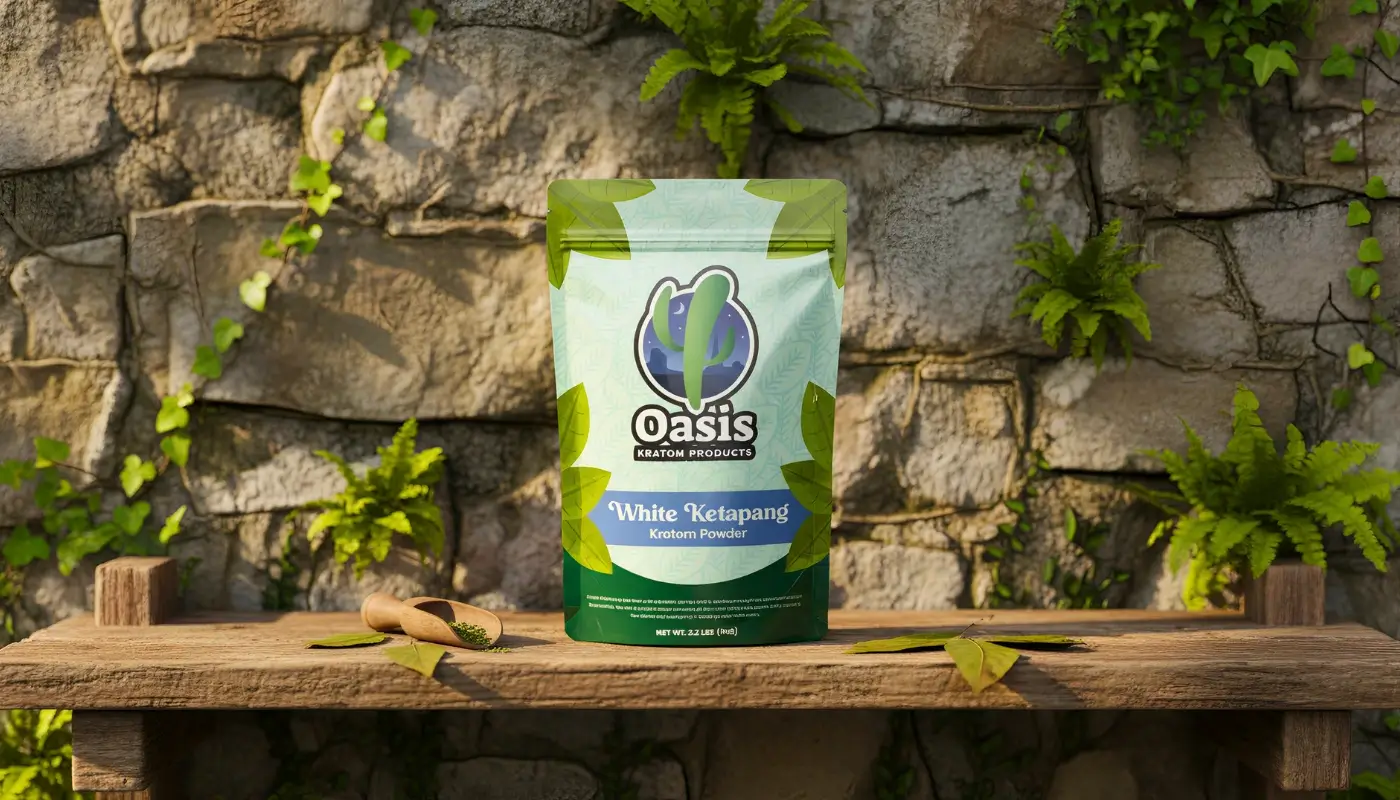
White Ketapang Kratom is a regional Kratom classification defined by sourcing location and the selection of white-veined leaves, not a single standardized strain.
Although the name sounds precise, it functions as a descriptive label rather than a fixed botanical identity. Understanding how this label is applied helps explain why information about White Ketapang Kratom can differ across sources and why the name itself does not imply uniformity.
What Is White Ketapang Kratom? Understanding The Strain First
Core definition: White Ketapang Kratom is identified by region and category, not by genetics.
- Ketapang refers to a sourcing region
- White reflects a classification based on vein color and harvest timing
- The combined name groups the leaf rather than defining a unique plant type
Kratom naming systems are informal and trade-based. Unlike regulated agricultural strains, these labels exist to organize material within sourcing and distribution channels. As a result, the name White Ketapang Kratom refers to how the leaves are categorized, not to their biological distinctiveness.
| 📌 Fun Fact:
Ketapang is an actual regency in West Kalimantan, Indonesia, and its name has been used in Kratom sourcing long before appearing in online strain lists. |
Where Does White Ketapang Come From? Regional Context Explained
White Ketapang Kratom is associated with Ketapang Regency in West Kalimantan, Indonesia. This region lies on the island of Borneo, which explains why some references use broader geographic terms when describing origin.
Rather than indicating multiple sources, these labels reflect different levels of geographic naming:
- Ketapang → local regency
- West Kalimantan → provincial region
- Borneo → island-level reference
| 📌 Note:
When White Ketapang is described as “Borneo Kratom,” it reflects geographic shorthand, not a different sourcing location. |
What Does “White” Mean In White Ketapang Kratom?
Key clarification: The “White” designation refers to Kratom leaves with white or light-colored veins.
- Kratom leaves are commonly categorized as white, green, or red based on vein color
- White-veined leaves are typically associated with earlier stages of leaf maturity
- Vein color is a natural characteristic of the leaf, not something created or altered after harvest
Because vein color develops as the leaf matures, classification reflects when the leaf is selected, not how it is processed. Leaves from the same tree may later develop green or red veins, which explains why color categories are tied to harvest timing rather than plant type.
| 📌 Pro Tip
White, green, and red Kratom leaves can all come from the same tree at different stages of growth, making vein color a marker of maturity rather than a separate botanical variety. |
For more information about each vein color, you can read this blog post: Red vs Green vs White Kratom: 5 Key Differences To Know
Alkaloids In White Ketapang Kratom
Kratom leaves contain a naturally occurring group of chemical compounds known as alkaloids, with Mitragynine being the most widely documented across Kratom research and lab analyses.
What matters for classification is that alkaloid composition is not fixed to a name. Even when leaves share the White Ketapang Kratom label, measurable alkaloid content can differ due to clearly identifiable factors, including:
- Geographic growing conditions, such as soil composition and local climate
- Leaf maturity at the time of harvest, which influences natural alkaloid development
- Drying and sorting consistency, which can vary between batches and suppliers
Disclaimer:
Since White Ketapang Kratom is a regional and vein-based classification, not a standardized botanical strain, there is no single alkaloid range that applies universally to all material sold under this name. Any alkaloid references tied to it reflect aggregated observations rather than a defined chemical profile.
White Ketapang vs Other White Kratom Types
White-labeled Kratom names are often grouped together, but they don’t all follow the same logic. Some are tied closely to a specific region, while others are broader trade or market labels that developed over time. Because of this, names that look similar can represent very different sourcing or classification approaches.
The table below compares White Ketapang Kratom with other commonly referenced white types, like White Maeng Da, White Borneo, and White Thai Kratom, to show how these labels differ.
| Comparison Criteria | White Ketapang Kratom | White Maeng Da Kratom | White Borneo Kratom | White Thai Kratom |
| Primary Naming Basis | Regional (Ketapang) + color classification | Trade name + color classification | Broad regional label + color classification | Market-based regional label |
| Geographic Reference | Ketapang Regency, West Kalimantan, Indonesia | Not tied to a single verified region | Island-level reference (Borneo) | Traditionally associated with Thailand, now largely sourced elsewhere |
| Use of Name in Trade | Sourcing identifier | Branding identifier | Regional grouping | Legacy market label |
Key Takeaway:
While all four are white-labeled categories, their names differ in purpose—some point to place, others to trade tradition or market familiarity.
Final Thoughts
White Ketapang Kratom is best understood as a regional and vein-based classification, not a standardized strain. The name reflects sourcing from the Ketapang region and the selection of white-veined leaves, rather than a fixed botanical identity.
Recognizing how these labels are applied helps explain why descriptions can vary across sources and how White Ketapang differs from other white-labeled categories shaped by trade or legacy naming. Overall, White Ketapang Kratom fits within a broader naming framework rather than representing a uniform or definitive classification.
FAQs
1. Is White Ketapang actually a distinct strain, or a marketing label?
White Ketapang is best understood as a regional classification rather than a genetically fixed strain. The name groups Kratom sourced from the Ketapang area and sorted as “white,” not a single standardized plant type.
2. Why does White Ketapang feel inconsistent between vendors?
Differences often come from batch variation, leaf maturity, drying methods, and blending practices. Since “White Ketapang” is a broad label, products with the same name may not be identical.
3. Can White Ketapang batches change over time from the same source?
Yes. Seasonal conditions, harvest timing, and processing decisions can lead to noticeable differences between batches, even when they originate from the same region or supplier.
4. Is White Ketapang Kratom harvested year-round or seasonally?
Kratom trees can be harvested throughout the year, but leaf characteristics may vary by season due to rainfall, climate conditions, and growth cycles. This seasonal variation can influence how batches are categorized after harvest.
5. How is White Ketapang Kratom different from other Ketapang-labeled products?
White Ketapang is differentiated by the selection of white-veined leaves from the Ketapang region. Other Ketapang-labeled products may reference the same region but differ in vein color or harvest timing.

 What Is Borneo Kratom: A Full Strain Guide