
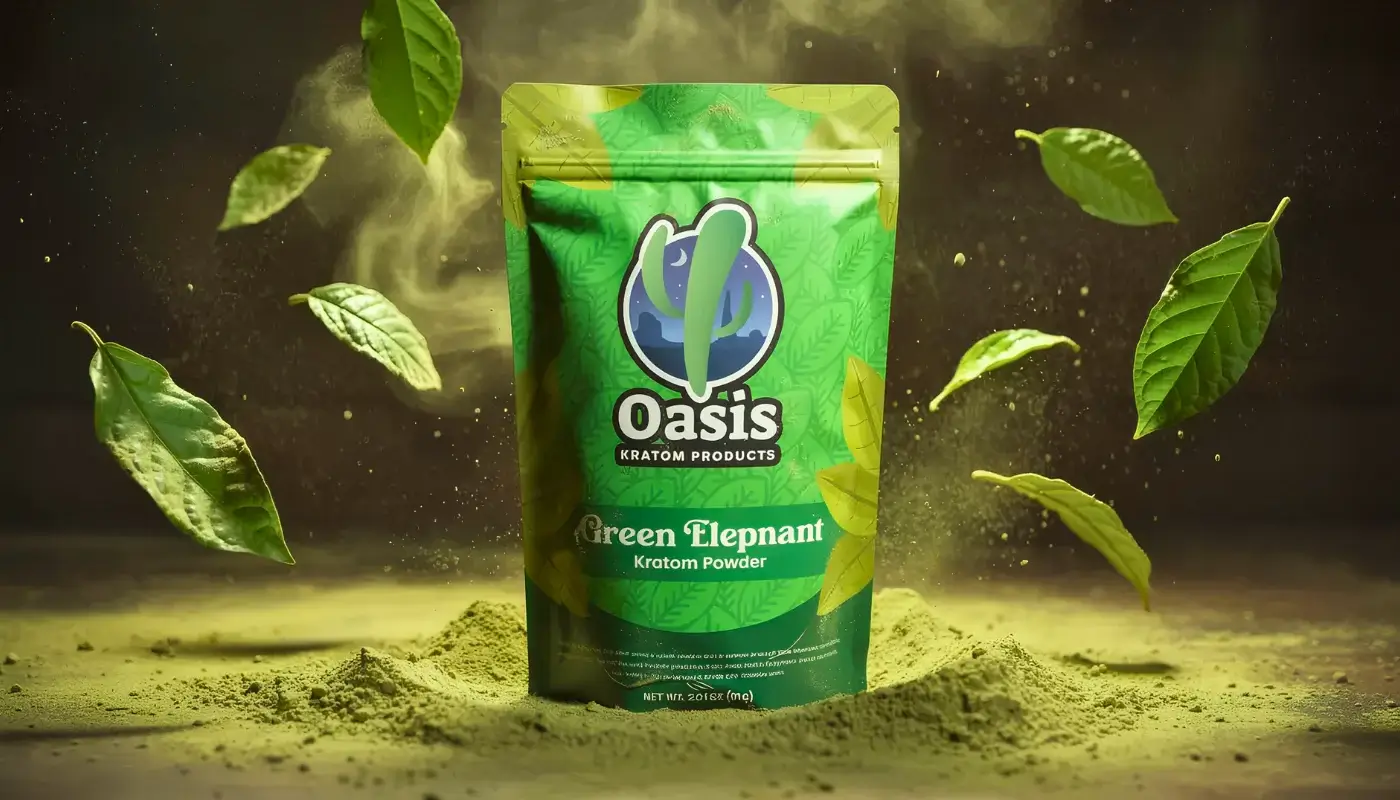
Green Elephant Kratom is a Green vein Elephant strain identified through physical leaf characteristics rather than regional naming. As interest in Elephant Kratom varieties continues to grow, understanding how this classification works helps clarify how it differs from other Green vein strains.
This guide breaks down what defines Green Elephant Kratom, how it is processed, how it compares to similar strains, and the factors to consider when evaluating quality.
What Is Green Elephant Kratom?
Green Elephant Kratom belongs to the Green vein Kratom category and is classified under the Elephant Kratom varieties group.
Key identifiers:
- Green vein classification
- Large, broad leaf structure
- Elephant strain designation based on morphology
Elephant strains are grouped by leaf size and structure, not by region-based naming systems. This makes the Green Elephant Kratom strain distinct in how it is identified within the broader Kratom market.
Why Is It Called “Elephant”?
The name “Elephant” comes from the unusually large size of the leaves selected for this classification.
What the name represents:
- Broader and thicker leaves
- Visual consistency during sorting
- A size-based classification approach
Elephant naming reflects physical attributes observed during processing, allowing for consistent identification across batches.
How Is Green Elephant Processed?
Processing plays an important role in how Green Elephant Kratom is sorted and classified.
The process typically involves:
- Leaf sorting to separate Elephant-sized Green vein leaves
- Controlled drying to preserve structural consistency
- Refinement aligned with Elephant strain standards
Only leaves that meet both vein color and size criteria are classified as Green Elephant Kratom.
Green Elephant Alkaloid Profile
Green Elephant Kratom contains naturally occurring alkaloids found in Mitragyna speciosa leaves.
Important points to understand:
- Alkaloid composition varies naturally
- Leaf maturity and environmental factors influence composition
- Processing methods contribute to batch-level variation
Alkaloid presence is one of several factors used to describe strain classifications, alongside leaf structure and processing selection.
Green Elephant vs Other Strains
Green Elephant Kratom differs from many other strains, such as Green Bali and Green Malay, due to how it is classified. Within the Green vein category, it stands out for its size-based classification framework.
Green Elephant vs Green Bali
Both strains fall under the Green vein Kratom category, but their identification methods differ.
Comparison overview:
- Green Elephant Kratom: classified by leaf size and structure
- Green Bali: identified through traditional naming practices
This distinction highlights that Green vein strains can be classified differently.
Green Elephant vs Green Malay
Green Malay is commonly associated with established naming conventions, while Green Elephant Kratom follows a morphology-based classification approach.
Core difference:
- Green Malay: naming-based identification
- Green Elephant Kratom: physical leaf classification
Both remain part of the Green vein category while being categorized differently.
How To Choose High-Quality Green Elephant Kratom?
Evaluating quality focuses on classification accuracy and consistency.
Key indicators to look for:
- Clear Elephant strain labeling
- Uniform appearance across batches
- Transparent sourcing and processing details
- Alignment with Green Elephant classification standards
Quality assessment is based on authenticity and documentation.
Final Thoughts
Green Elephant Kratom is defined by its Green vein identification and Elephant strain classification, which emphasize leaf size, structure, and processing selection.
Understanding these characteristics makes it easier to distinguish Green Elephant Kratom from other Green vein varieties and recognize how classification systems shape strain identity within the Kratom industry.
FAQs
1. Is Green Elephant Kratom a single strain or a strain category?
Green Elephant Kratom is considered a strain classification based on leaf characteristics rather than a single genetically distinct cultivar.
2. How is Green Elephant Kratom classified?
It is classified as a Green vein Kratom strain within the Elephant category, which groups varieties based on leaf morphology.
3. Can Green Elephant Kratom appear in different product forms?
This strain may be available in multiple formats, such as capsules and powder, with Green Elephant Kratom Powder being the most popular one.
4. Is Green Elephant Kratom a traditional or modern classification?
Elephant Kratom classifications are relatively modern and are used primarily for commercial and descriptive purposes rather than historical regional naming.
For more comprehensive guides on different Elephant strains, check out the related blogs:
White Elephant Kratom Guidebook – Strain Overview & Insights
Red Elephant Kratom: A Comprehensive Guide

 Kratom Holiday Gifts to Light Up Your Winter Wishlist
 Malay Kratom: Explore Everything About This Popular Strain